


Dreamkeeper™ Spotlight: Dr. Gholdy Muhammad
Rooted in legacy, building from cultural excellence, and branching toward futures shaped by joy, justice, and genius.. Dr. Gholdy Muhammad is a cultivator of brilliance, with the spirit of an educator and the soul of a historian, her work dares to imagine classrooms not just as spaces of learning, but as sanctuaries of joy, purpose, and profound belonging.

"I think it’s okay to live in your own world, in your own joy, even if people don’t understand it yet. You might need to be the model that they need to see. I live most of my life in my dreams, so this is to maintain my joy. It’s dreaming.”
In my conversation with Dr. Muhammad, I was invited to reflect deeply on what I’ve been taught, what I’ve inherited, and what I truly believe. Her wisdom urges a departure from conventional thinking and a return to self: to joy, to cultural memory, to purpose. Leading with confidence, faith, and radical self-belief, she reminds us that dreaming is not a luxury, it’s a legacy.
"At one point in my life, I just said, ‘What happens if I just do it and say it with confidence and have a go for broke, James Baldwin type of mentality.’ People will respect when you have a positive entitlement about the genius and brilliance of who you are. And if they don’t, you don’t want them in your company anyway.”
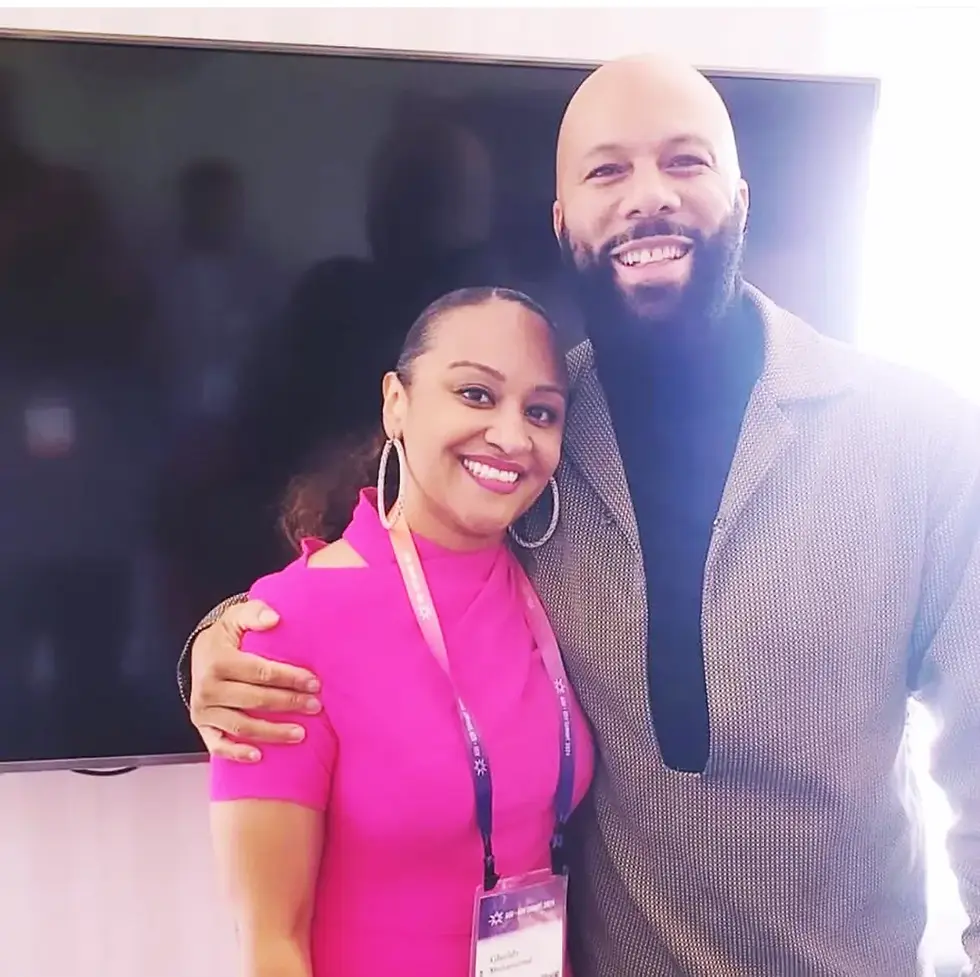
DR. GHOLDY MUHAMMAD IN CONVERSATION
Q: What advice would you give to someone who feels like they don’t fit the traditional mold of success?
I would like to question; what is the traditional mold of success and who defines it? Most of the time it’s not defined by the lives of people of color, by Black women, by Indigenous people. It’s really defined by a group of people that sometimes haven’t really fit our traditional mold of our heart or our faith. So we’ve been using certain standards against lives, aspirations and minds that are just not like us. I would really push that person to go seek greatness, by looking to their ancestors, their community, and their own path. They may already fit a deeper, truer version of success. We have to be very careful at comparing ourselves to other people, instead of just comparing ourselves to ourselves.
"What we need to do is set our own dreams, our own aspirations and go above and beyond ourselves and let that be the mold. Dreaming of who we can become.”
If somebody feels like they don’t fit some kind of mold, I’m going to always remind them that we come from genius, we come from greatness, we come from joy, we come from 110%. We don’t come from basicness. I remind them of who they are, who they come from, and who they belong to; that they will become something that is beyond their dreams, their prayers, their imagination. Especially younger people.

Q: What’s a cultural or personal belief you’ve challenged along your path to prosperity?
One is; just the idea of possibility, and what’s possible. I think we have placed limitations on ourselves based on other people’s experiences. Again, when we compare ourselves to this ‘traditional mold’, that mold is so basic and so minimal compared to who we can really become. So I think I’ve really challenged this idea of what’s possible in my work, especially. My whole life has been sort of this challenge of possibility; of what can be in the world, what I can be, who I can be, how I can think, and how I can write. I have moments in my life, in my career, where I’ve just challenged the possibility of what can be possible, and not placing limitations on myself, on others, even on pedagogy and content areas.
Q: What is your dream anthem, the song that fuels your ambition?
I really love Stevie Wonder and his music. I would say a collection of his works, an album, because they tell a story. My favorite Stevie Wonder song is Summer Soft. This is a song about the four seasons, and I think that keeps me going, because sometimes, we get sad during certain seasons, or I feel like I’m tired and I want to give up. The song is so beautiful because it highlights what’s beautiful about each season and how spring comes back again.
Q: Who in your life challenges you to dream differently?
I would say my parents and children. The children in my life, teach me how to be better, how to correct my tongue, watching what I say and how I say it, and to try to be my best self. People are typically the best of themselves around children. Also, my parents, they’re always pushing me to dream, to think, to become, to see the best of myself. I say I have two partners, my best friend and my husband, and they both challenge me and accept me. Dr. Yolanda, she’s a professor at Columbia University Teachers College, she can take something in that I’m experiencing or feeling or writing, and she’ll see beyond my thinking. Oftentimes, she’ll dream bigger than myself, and she’ll invite me into my own dream. Honestly, a lot of times it has actually become a reality. My husband too is my dream keeper. He encourages me to keep going.
This is honestly the best advice I would probably give somebody: keep dreamers, keep genius around you. I used to say all the time, ‘my friends are smarter than me’. You need to keep beautiful people around you that want for you what they want for themselves, if not more.

Q: What’s the most unconventional decision you’ve made that paid off?
I chose Islam. I don’t know if that’s unconventional or not, but for some I choose to pray five times a day. I choose to do a lot of fasting. That’s been the best decision. It gives me peace. It’s giving me understanding, it’s giving me everything I could ever ask for and more. I’m just so in love with my faith, and I’m so grateful.
The other decision is, I’ve just been doing things my own way. I always did more, whether I was a new teacher or a student. And that was really unconventional. I do a lot of things unconventional, even the way I wrote my book with poetry, art and music QR codes. There are about 44 states where my model has been adopted, and to have a pedagogical model written by a Black woman a Black Muslim woman, and was inspired from Black ancestors, is huge because most of the time, people use models that were written by white women. People are talking about joy, and they’re seeing more Black children as geniuses.


Comments